
"If you found your way here, something led you."
Maybe it was a piece of content that said something you’d been trying to articulate for years. Maybe it was a referral from someone who understood what you were looking for. Maybe it was a quiet accumulation of evidence that the way you’d been approaching your brand wasn’t working — and a growing suspicion that the problem wasn’t what you thought it was.
Whatever it was, you’re here now. So let me tell you what this place is and who built it.

I started with Myspace layouts.
Not as a career move — as a fixation. I was a kid who couldn’t leave a profile alone. I’d find a layout someone else had built and immediately start pulling it apart, tweaking the CSS, swapping the colors, rearranging the elements until the page felt like something rather than just looked like something. I wasn’t trying to make things pretty. I was trying to understand why certain pages made you stop scrolling and others didn’t. What created the pull? Where the feeling came from.
Tumblr came next, and the question sharpened. The platform had no algorithm worth speaking of in its early years — discovery was almost entirely social, which meant the blogs that spread were the ones that built something people wanted to be part of. I watched communities form around aesthetics. Around sensibilities. Around ways of seeing the world that felt specific enough to be a secret and legible enough to spread. Some blogs had thousands of followers. Others, with objectively better content, had almost none. The difference wasn’t quality. It was world-building — the presence or absence of an internal logic that made the reader feel like they’d found somewhere they belonged.
I kept pulling at that thread.
Then I came across Jigoku Shōjo — Hell Girl.
It’s a horror anime. The plot matters less than what the marketing team did with it. They didn’t promote the show the way you’d promote a show — no trailers, no cast interviews, no sponsored content. They built an urban legend. Cryptic posts spread across social media describing a strange girl who could drag someone to hell if you knew how to reach her. The posts always had the same texture: handwritten in tone, specific in detail, wrong in a way that felt intentional. And they always led back to the same place — a stark black page with a single form: submit a name, tell us your grievance.
The show ended. The legend didn’t.
People are still searching for that page. Not because the anime was exceptional — it was good, but it wasn’t generational — but because the world built around it had enough internal logic and substance that it took on a life independent of the product it was meant to promote. The brand outlived the product. The myth outlived the marketing.
"The brands that last aren’t the ones with the best aesthetics or the most consistent posting schedule. They’re the ones that built a world — and then trusted that world to do the work."
That was the answer to the question I’d been pulling at since the Myspace days. The brands that last aren’t the ones with the best aesthetics or the most consistent posting schedule or the cleverest campaigns. They’re the ones that built a world — with rules, with atmosphere, with a sense that belonging to it means something — and then trusted that world to do the work.
I’ve been building that kind ever since.

What I believe.
A brand is a world. That world has to be built before it can be maintained, not optimized or aligned — built, from the ground up.
Most founders skip the build. They arrive at the visual identity phase with a loose sense of what they’re trying to say and a tight deadline, and they receive something that looks right but doesn’t function, and then spend the next several years trying to hold it together by hand. Every piece of content is a negotiation between what the brand is supposed to be and what it actually looks like today. Every new hire requires a lengthy explanation of things that should be self-evident. Every season begins from scratch.
The exhaustion that is produced isn’t from overwork. It’s from not trusting the thing you built. A brand with real infrastructure underneath it doesn’t require that kind of vigilance. It holds. It attracts. It filters. It runs whether or not its founder is in every room.
"The exhaustion isn’t from overwork. It’s from not trusting the thing you built."
Specificity creates belonging. The founders who come here want deeper connections with their customers, clearer differentiation in their market, and pricing that holds without a defense. All three of those things come from the same source: a brand specific enough that the right person feels it was made for them. A brand that tries to welcome everyone builds nothing worth entering. The secret society only works because not everyone gets in — and the people who do feel it the moment they cross the threshold.
Beauty and rigor are the same thing expressed differently. The work is romantic in sensibility and surgical in process. I ask questions most designers don’t ask — about origin stories and belief systems and the specific texture of what makes your ideal customer loyal — and I use those answers to build something that functions at the level of culture rather than just design, the aesthetic matters. The infrastructure underneath it matters more.
A business can survive without its founder’s constant presence — but only after the infrastructure is right. Most founders are holding their business together through sheer proximity. They haven’t built the systems, the language, the visual standards, the behavioral patterns that would allow the brand to operate consistently in their absence. That’s not a character flaw. It’s a structural gap, and it has a structural fix.
The right clients find you, and the wrong ones disqualify themselves. This is true of the work I do, and of the brands I build. When the world is constructed correctly, the filtering is almost automatic — the right customer arrives already oriented, already resonant, already inclined to stay. The wrong one feels the quiet friction of not quite fitting and moves on. Both outcomes are correct. A brand that tries to please everyone attracts no one worth keeping.
The relationship between a founder and their brand is one of the most consequential relationships in their professional life, and it deserves to be treated that way. The inquiry form is brief. The discovery call is a consultation, and the proposal names what was found. The work is incremental and precise. Nothing gets decorated that doesn’t first get built. That’s not a methodology. It’s a philosophy about what the work is actually for.
The work.
For five years, I served as Creative Director of Hope For The Day, a mental health nonprofit operating at the intersection of alternative culture, music, and advocacy. The organization ran events, campaigns, and community activations across the country — festivals, concerts, gallery shows, street-level outreach — all of it dependent on a brand that could be executed consistently by staff, partners, and volunteers who were rarely in the same room and often didn’t know each other.
I built the infrastructure. Brand guidelines, distribution frameworks, and project management structures that kept production moving across departments and stakeholders with competing priorities and wildly different levels of design literacy. The brand had to be simple enough for a volunteer to execute correctly at a pop-up booth and specific enough that it still felt like itself when a national media outlet picked it up. That range is where most brand systems fail — they’re built for one end of the spectrum and come apart at the other.
When COVID shut down the events calendar and threatened to close Sip of Hope — the organization’s coffee shop and a primary income source for its team — the infrastructure I’d built did what infrastructure is supposed to do under pressure. It held. The Save Sip campaign mobilized the community that had been built around the brand over years of consistent, specific, considered work. The doors stayed open.
"Brand infrastructure that holds under pressure. That’s the standard every engagement is built to."
The studio work that followed is drawn from the same principles, applied to founders in retail, hospitality, and entertainment industries, where the brand experience is the product as much as anything on the shelf, or the menu, or the stage. Every engagement begins with a consultation. The proposal names what was found. The build moves through the architecture of the brand in sequence. Nothing is decorative. Everything earns its place in the system.
What gets built here?

The Parlor
Let's build a brand identity that helps people see the value of what you do and keeps everything consistent when you leave the room, whether your brand is evolving or needs some attention.
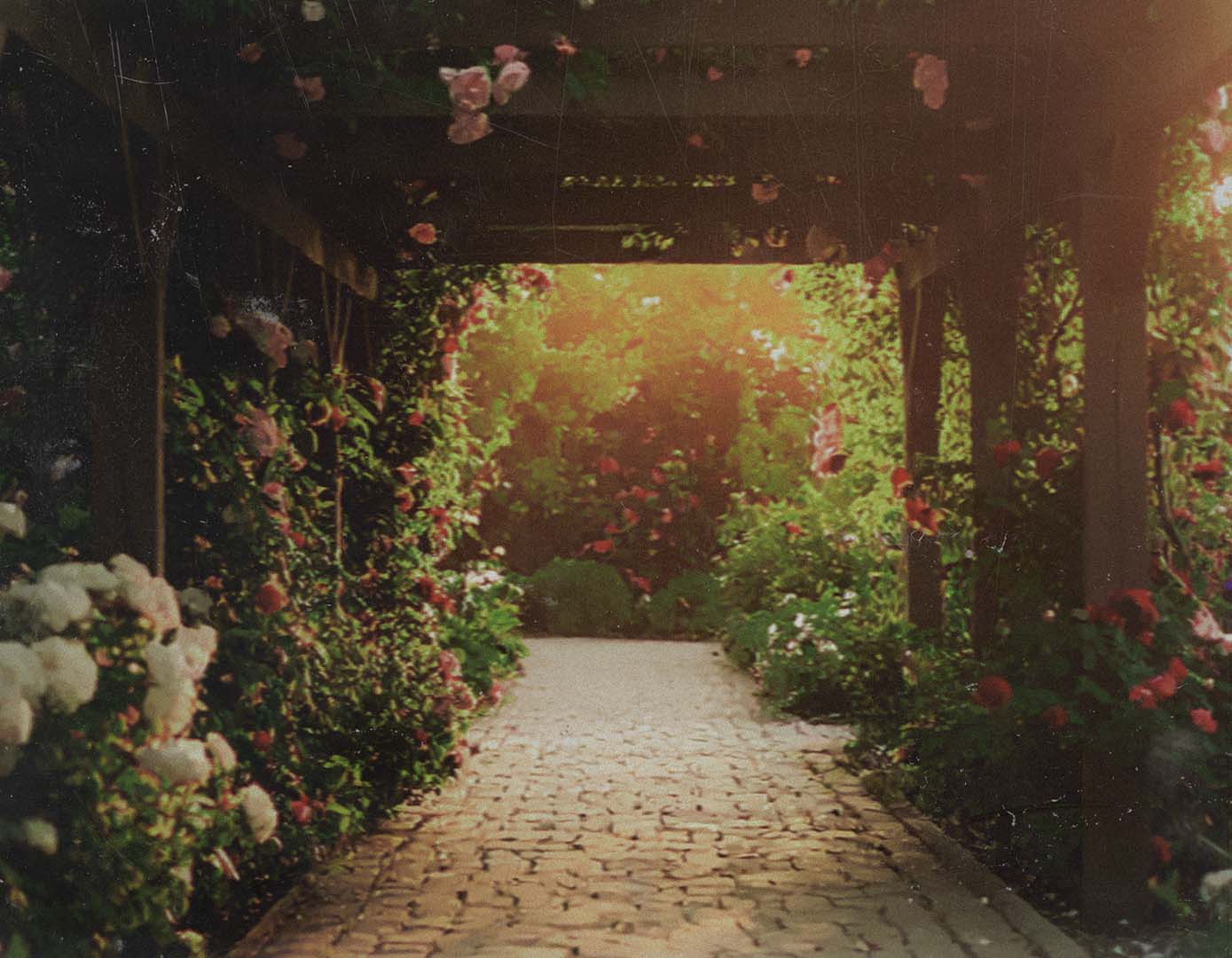
The Garden
A brand management subscription that also handles your marketing materials, including social media content, pitch decks, press materials, and print collateral, so you can get back to what you do best.

Who belongs here?
Founders in retail, hospitality, and entertainment who have been building long enough to know the difference between a business that looks like a brand and one that actually functions like one. They’re thoughtful. They have taste. They care about the specificity of things — the right word, the right material, the right atmosphere in a room. They’ve reached the point where caring isn’t enough anymore, because caring doesn’t scale.
They want deeper connections with their customers. They want differentiation that’s legible without being explained. They want pricing that holds because the value is self-evident. They want to step out of the room and trust that the world keeps running.
They don’t need to be convinced that brand matters. They need someone who can build the version of it they’ve been carrying in their head. The one that’s been almost right for years.
They arrive here because something led them. A piece of content. A referral. A slow accumulation of evidence that the problem they’ve been trying to fix with tactics is actually structural. They arrive ready to build. They stay because they recognize the room they’ve walked into.
"The door is open. The parlor is waiting."
More about me
"My music taste is equal parts 90's nostalgia and cringe."
R&B • Goth • K-Pop • House • Alt Jazz • Alt Pop • Hip-Hop • Afro Beats • Amapiano • Alt Classical • Industrial • Dark Wave • Horror Punk
Film & TV Starter Packs
"If you asked me where to start, this is what I'd tell you."
Fantasy/Sci-fi:
Blade • Elektra • The Crow • The Matrix • Under World • Alien vs. Predator • Lord of the Rings • Anything by Del Toro
Action:
Romeo Must Die • Crouching Tiger, Hidden Dragon
Horror/Suspense:
Rose Red • From Dusk Till Dawn • Anything by A24, Del Toro, or Stephen King
Anime:
Mushishi • Inuyasha • Black Cat • Wolf's Rain • Death Note • Fooly Cooly • Cowboy Bebop • Paranoia Agent • Yu Yu Hakusho • Samurai Champloo • Hell Girl (Jigoku Shōjo)
Tools I Use
Writing Editors:HemingwayappGrammarly
Alt Text generator:alttext.ai
Design, Image Generation, And Photo & Video Editing:Creative Cloud
Asset Licencing:Century LibraryEnvatoCreative Market
Content Creation And Scheduling:
BufferAdobe Express
Forms and Surveys:
Fillout
Website Auditor And Health Tracker:Ahrefs
Royalty free Images:Dupe PhotosCosmos Public Work Met MuseumThe Art Institute of ChicagoPexels
Chicago, IL USA. © 2016-2026 Viki Sisnette. All rights reserved.


